Who is buying Dubai's ultra-prime property is a question shaping headlines and market perception in 2026. Media narratives typically focus on one set of dominant consumers. Transaction data tells a more layered story. This blog breaks down Dubai's ultra-prime segment by buyer origin, motivation, and preferred community, using observable transaction patterns rather than assumptions.
It covers Russia, China, and Europe by name, alongside the UK and India for full context, since limiting the picture to three nationalities would miss most of the segment. The goal is a clear, evidence-led picture of who is actually driving demand at the top of Dubai's market, and why each group buys where it does.
Understanding this composition matters not only because of the segment's current size, but also because of its long-term durability.
Dubai Ultra-Prime Market at a Glance
Ultra Prime in Dubai applies to houses that cost AED 10 million or more. The segment saw good transaction growth in 2025, largely due to foreign investments and not domestic demand.
It accounts for only a small portion of the total transaction volume, yet it comprises most of the total transaction value from the entire market, and that means it is a useful window for identifying where the worldwide wealth is currently going.
Also, getting to know its content gives the market players, realty specialists, and data scientists an edge to see the change in demand even before these changes become market-wide trends.
| Metric | Figure |
|---|---|
| Sales Price (Ultra-Prime) | AED 10-24 million |
| Est. 2025 transaction volume (Ultra-Prime) | 500 |
| Foreign buyer share | 80%+ |
| Top 5 nationalities, combined share | 74% |
25.1% price growth in a single year. 193.9% cumulative growth over five years. And 500 transactions above USD 10 million in 2025 alone, compared to just 113 deals at that level in 2021.
Ultra-prime transactions shape global perception of Dubai's market far more than their transaction count alone would suggest, and they attract disproportionate media coverage relative to their share of total sales. The perception of international sentiment is more influenced by a few stiff sales per quarter than by thousands of mid-market sales.
Buyer-Origin Snapshot: Top Nationalities
The following breakdown draws on transaction-level data across Dubai's leading communities, benchmarked against public reporting from major regional brokerages.
| Nationality | Est. Share of Ultra-Prime Transactions |
|---|---|
| India | 22% |
| UK | 11% |
| Russia | 9% |
| China | 14% |
| Europe (France, Germany, Italy) | 10% – 12% |
No single nationality dominates Dubai property market. The top five buyer groups combined account for roughly 74% of transaction volume, with the remainder spread across dozens of other nationalities, including a growing share of buyers from the Gulf region itself, alongside smaller but rising activity from Nigeria, South Africa, and Southeast Asia.
Russia: Capital Preservation and Portfolio Diversification
Russian buyer activity in Dubai's ultra-prime segment concentrates in freehold waterfront communities and branded residences. Observable transaction behaviour points to capital preservation outside the ruble and currency diversification as primary drivers.
Many purchases are cash transactions, avoiding financing entirely, which is consistent with a preference for speed and minimal paper trail through lending institutions. A smaller share involves family relocation, particularly where children are enrolled in Dubai international schools.
The segment continues to be one of the most highly monitored in the market, but its percentage has slightly levelled off since 2022 when it peaked, with other nationalities following in the same direction. The average length of time that they held on to their investments is also longer than market averages, indicating a buy-and-hold instead of flip-focused strategy.
China: Long-Term Wealth Migration and Education Access
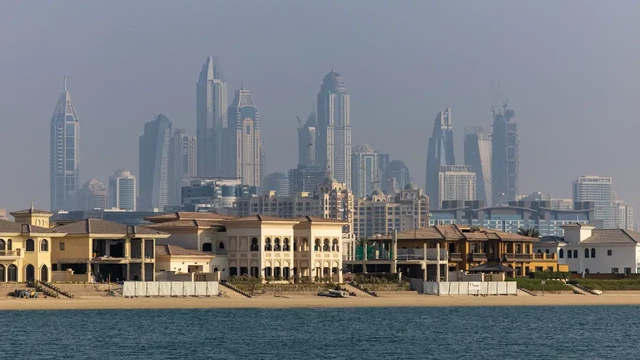
Chinese demand in Dubai's most expensive luxury market comes as part of the widespread trend of capital outflows from China moving beyond the more traditional markets of London and Vancouver, where restrictions have been placed on foreign investors.
Purchases frequently link to family relocation, with proximity to international schools a consistent factor in area selection. Off-plan branded developments attract particular interest, partly due to flexible payment plans that suit staged capital transfer over several years.
Chinese ultra-prime demand has grown steadily rather than spiked, suggesting a considered, long-term allocation strategy rather than short-term speculation on price movement. Buyer groups in this segment also show a higher-than-average interest in properties with strong onward resale potential to other Chinese buyers.
Europe: Lifestyle, Tax Efficiency, and Second-Home Demand
The reason why UK, French, German, and Italian buyers buy in Dubai's ultra-prime segment is mainly due to lifestyle and tax efficiency, not just investment return. Dubai is an appealing option for high-income earners and retirees, as there is no income tax and no capital gains tax on property.
This buyer's market is divided into villas and low-rise (low-rise homes that are not branded towers) in Palm Jumeirah and Emirates Hills, rather than other nationalities' preference for high-rise, branded towers. UK buyers in particular often purchase during winter months, aligning acquisitions with seasonal travel patterns.
These area preferences aren't random. They are a reflection of each group's prime motivation, whether it be proximity to the schools, the lifestyle of a beachfront home, or planning for retirement. Marketing and even show-home staging are becoming more and more tailored toward these documented preferences by origin, as are the marketing strategies developed by the developers and agents.
Where Each Nationality Buys: Area Preference by Origin
| Nationality | Top Communities | Typical Product |
|---|---|---|
| Russia | Palm Jumeirah, Dubai Marina, Business Bay | Branded apartment, beachfront villa |
| China | Downtown Dubai, Dubai Hills | Off-plan branded apartment |
| Europe | Emirates Hills, Palm Jumeirah | Villa, low-rise |
| India | Downtown Dubai, Dubai Hills, Palm Jumeirah | Penthouse, branded apartment |
| UK | Palm Jumeirah, Emirates Hills | Villa, branded residence |
Why Capital Keeps Flowing to Dubai: The Macro Picture
Dubai appeal to ultra-prime buyers is structural, not tied to any single nationality's circumstances. Currency stability, the absence of property tax, and a fast Golden Visa pathway attract capital from multiple regions simultaneously.
Geopolitical neutrality adds a further layer of appeal, allowing buyers from opposing political blocs to hold assets in the same city, often in the same building, without friction between them. This combination of factors explains why demand has remained resilient even as individual source markets face very different domestic pressures, from currency controls to shifting immigration policy elsewhere.
Dubai's time zone, connecting Asia, Europe, and Africa within a single working day, adds a further practical draw for internationally mobile buyers managing assets across regions.
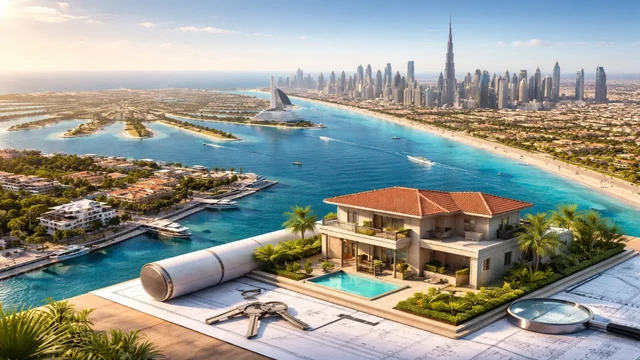
What Buyer Diversity Means for Market Stability
A multi-origin buyer base reduces Dubai's dependency on any single capital source. If one region's outbound investment slows due to currency controls, sanctions, or a domestic downturn, others typically continue, cushioning overall demand at the top of the market.
This diversification supports greater price stability at the top of the market than a single-nationality-dependent segment would allow. This isn't so much a reflection of individual countries but a representation of the diversity of buyers that is more important as an indicator of long-term resilience for investors.
It also implies that agents and developers will need to rely on multi-lingual and multi-market sales approaches, rather than a one-size-fits-all sales approach, because there is no one buyer profile that can be taken for granted.
Summary
There is no one specific nationality that dominates the ultra-prime market in Dubai. It's a really multi-polar capital, with Russians, Chinese, Europeans, Indians, and more, with different motivations and preferences for the area, based on their own home circumstances. It's this diversity that is a marker of maturity and resilience in the market, not a curiosity for the headline writers.
When buying and selling in this market segment, it is important to understand the dynamics behind others' involvement and motivations to know the pricing, the demand and long-term value. It also helps explain why Dubai's ultra-prime segment has continued to attract capital even during periods when individual source markets faced significant domestic headwinds of their own.
FAQs
Who are the biggest foreign buyers of Dubai property in 2026?
India, UK, Russia, China and continental Europe are responsible for about 74% of residential transactions in Dubai, with none having a strong dominant share of the market.
Why are Russian buyers active in Dubai's property market?
Observable transaction behaviour points to capital preservation outside the ruble, currency diversification, and in some cases family relocation, as primary drivers of Russian buyer activity in this segment.
Are Chinese investors still buying property in Dubai?
Yes. Chinese buyer activity has grown steadily, driven by outbound capital diversification and family relocation linked to international school access, rather than short-term speculation on price movement within a single market cycle.
What price counts as “ultra-prime” in Dubai real estate?
Dubai's ultra-prime segment typically starts at AED 10 million, covering branded residences, beachfront villas, and penthouses in the city's most established and internationally recognised communities.
Which Dubai communities attract the most foreign luxury buyers?
Palm Jumeirah, Emirates Hills, Downtown Dubai, and Dubai Hills Estate attract the largest concentration of foreign ultra-prime buyers across nearly every nationality tracked in current transaction data.





 Dubai Islands