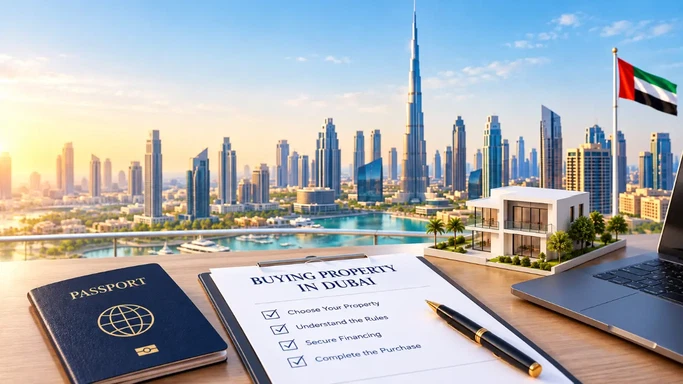
One of the most searched questions from foreign investors in Dubai in 2026 is how they can purchase property in Dubai. In certain areas of the city, foreigners are allowed to acquire land on a straight ownership basis without any residency requirement, and without restriction on nationality.
This guide covers eligibility, the difference between freehold and leasehold ownership, the full list of freehold areas, the step-by-step buying process, financing options, and the legal protections in place for foreign buyers. At the end, you will know the entire process from start to finish, and what you need to do in preparation before you make an offer.
Can Foreigners Buy Property in Dubai? Eligibility at a Glance
There are no residency or nationality restrictions on purchasing property in Dubai. Both individuals and companies can purchase property, and financing options are available to residents and non-residents. Dubai has a diverse population of buyers from around the world, as the rules are strictly adhered to for everyone, no matter their current residence or citizenship.
| Buyer Type | Eligibility | Ownership Type Available |
|---|---|---|
| Individual, any nationality | Fully eligible | Freehold or leasehold |
| Company or corporate entity | Fully eligible | Freehold or leasehold |
| UAE resident | Fully eligible | Freehold or leasehold |
| Non-resident, overseas | Fully eligible | Freehold or leasehold |
Freehold vs Leasehold: What You're Actually Buying
Freehold ownership means that you own the unit and the land under it and have full rights to sell and to inherit. Leasehold ownership provides a long-term lease (usually for 99 years), but the land itself is not owned.
While most areas for foreign investors are freehold, there are a number of older developments that are leasehold, so it is important to verify the ownership type before purchasing. While this issue is important for resale, it is also relevant to what you can leave to your heirs, and it's a good rule of thumb to discuss with any agent before you sign on the dotted line.
| Ownership Type | Duration | Land Ownership | Resale Rights |
|---|---|---|---|
| Freehold | Indefinite | Yes | Full |
| Leasehold | Up to 99 years | No | Limited, subject to lease terms |
Where Foreigners Can Buy: Freehold Areas in Dubai
Since 2002, Dubai has been allowing foreign ownership in freehold zones, and this has grown since then. Here is a sample of existing and growing successful freehold communities, representing various budgets, lifestyles, and the most frequent international buyer transactions in the market today.
| Area | Property Type | Notable For |
|---|---|---|
| Downtown Dubai | Apartment, penthouse | Iconic skyline, high rental demand |
| Dubai Marina | Apartment | Waterfront lifestyle, strong rental yield |
| Palm Jumeirah | Villa, branded apartment | Beachfront, ultra-prime segment |
| Business Bay | Apartment | Central location, mixed-use development |
| Dubai Hills Estate | Villa, townhouse | Family-oriented, golf course community |
| JVC | Apartment, townhouse | Affordable entry point, high yield |
| Dubai Creek Harbour | Apartment | Waterfront, new master development |
| Emirates Hills | Villa | Ultra-prime, low-density luxury |
These cover the entire spectrum of prices, from entry-level apartments in JVC to the ultra-luxury villas in Emirates Hills, and offer real choice for foreign investors, not just a luxury option. Newer freehold zones are still being added as Dubai's master developers are opening up new undeveloped areas in the city.

Step-by-Step: How to Buy Property in Dubai as a Foreigner
The typical buying process required by most buyers, whether they are buying a ready property or their off-plan unit directly from the developer, is set out below.
- Scouting Your Options: Browse listings and shortlist units that match your target community and budget (1–3 weeks)
- Locking In the Unit: Sign the reservation paperwork and put down a deposit to hold the property (1–2 days)
- Verifying the Details: Confirm the title is clean and vet the developer's track record (3–5 days)
- Signing the Contract: Execute the SPA or MOU alongside the seller (about 1 week)
- Sending Payment: Wire funds directly or through the developer's payment plan (3–7 days)
- Recording Sale: Dubai Land Department registers ownership and issues the title deed (1–3 days)
- Getting the Keys: Property is handed over and ready to use or lease out (on completion)
The process is similar in both cases, although with off-plan properties, it's likely that the payment will be made over the course of construction, rather than a lump sum at signing.
Having a licensed agent on board during the process helps ensure that each stage of the process is completed on schedule, as most delays are usually caused by delayed paperwork and not the actual transaction.
Financing Options for Foreign Buyers
Non-resident foreign buyers can access UAE mortgages, typically at a lower loan-to-value ratio than residents. Developer payment plans remain the most commonly used financing route for off-plan purchases, spreading cost across the construction timeline without requiring a bank loan at all.
The basic difference between the two options is that some individuals prefer to have a lot of liquidity in other assets, while others are willing to commit to a longer-term financing arrangement that is tied to an individual asset.
| Financing Type | Typical Terms | Who It Suits |
|---|---|---|
| Cash purchase | Full price paid on completion | Buyers avoiding financing costs |
| Mortgage, non-resident | 50% – 60% loan-to-value, 15 – 25 year term | Buyers leveraging capital abroad |
| Mortgage, UAE resident | Up to 80% loan-to-value | Residents with local income |
| Developer payment plan | 40% – 60% during construction, rest on handover | Off-plan buyers |
Legal Protections for Foreign Buyers
Dubai's real estate market is governed by strict regulations that ensure buyers, even foreign investors who lack knowledge of the local real estate system, are safeguarded. RERA (Real Estate Regulatory Agency) is responsible for regulating the compliance of all market participants and for the licensing of both developers and brokers.
Properties constructed under off-plan conditions must have an escrow account, where the buyers' money will only be spent on that project. Title registration with the Dubai Land Department provides a clear, legally recognised record of ownership.
Disputes are handled through RERA's dedicated rental and real estate tribunals, alongside the standard Dubai court system, giving foreign buyers a defined path to recourse if issues arise. This regulatory framework has developed substantially over the past decade, closing many of the gaps that once made off-plan investment riskier than it is for buyers today.

Costs to Budget For
| Cost | Typical Amount |
|---|---|
| DLD transfer fee | 4% of purchase price |
| Agency fee | 2% of purchase price (typical) |
| Mortgage registration fee (if applicable) | 0.25% of loan amount |
| Annual service charges | AED 10 – 25 per sq ft, per year |
| Annual property tax | None |
| Capital gains tax | None |
Residency Through Property Investment
A property investment of AED 2 million or more qualifies for the UAE Golden Visa, a 10-year renewable residency extending to a spouse and children. Processing typically takes 30 to 60 days from application, and often runs in parallel with the closing stages of the property purchase itself. This pathway applies equally to buyers of any nationality, and sits alongside the property purchase as an added benefit rather than a separate application requirement.
Closing In
Property purchases in Dubai by foreign investors are readily available, accessible to all nationalities, and the process is well regulated. Having a grasp of the difference between freehold and leasehold, an understanding of where to get the property, and the standard procedure will help you avoid the most common first-time mistakes.
Foreign buyers are protected by strong regulations, with RERA and the DLD ensuring that there is real legal protection throughout the process of reservation, registration, and beyond.
FAQs
Can foreigners buy property in Dubai without residency?
Yes. No restriction on residency to purchase property in Dubai. Foreign nationals, regardless of nationality, can buy freehold property directly, without necessarily having a UAE visa.
What is the difference between freehold and leasehold in Dubai?
Freehold ownership includes the land and offers full resale rights. Leasehold grants a long-term lease, typically up to 99 years, without ownership of the underlying land.
Can foreigners get a mortgage to buy property in Dubai?
Yes. UAE mortgages are available to non-resident foreign buyers, offering loan-to-value ratios of 50-60% with the chance of higher ratios for UAE residents.
Is my property investment legally protected in Dubai?
Yes. It is controlled by RERA, it is protected by escrow accounts for off-plan funds, and it is legally registered by the Dubai Land Department throughout.
How much does it cost to buy property in Dubai as a foreigner?
The total cost of the transaction should be approximately 6% to 7% of the purchase price, which includes the DLD transfer fee, agency fee, and the mortgage registration fee.





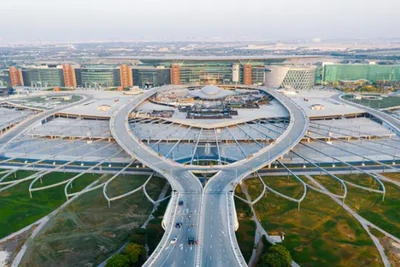


 Dubai Land Residence Complex (DLRC)