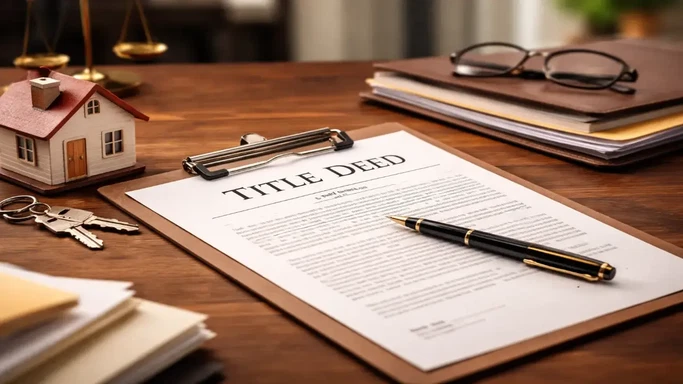
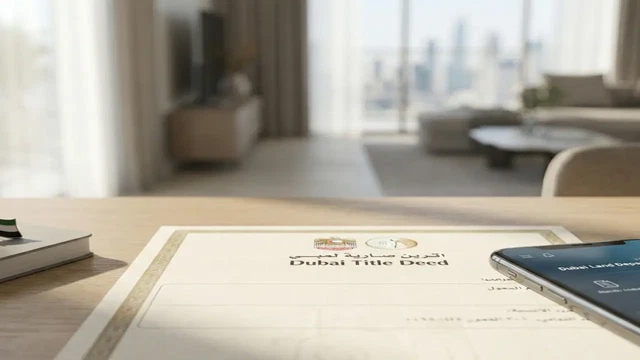
A Dubai title deed is a legal document issued by the government to establish ownership of a property. It's issued by the Dubai Land Department, a government body that registers real estate throughout the emirate.
This document has the same legal status for foreign buyers as any other document of ownership in the world. This guide explains the title deed system step-by-step. It also covers the process of how you can acquire your own title deed and the rights that it gives you as an owner.
Overview of Dubai Title Deed
| Detail | Information |
|---|---|
| Issued by | Dubai Land Department (DLD) |
| Also called | Title deed, deed of ownership, property registration certificate |
| Format | Physical certificate plus an electronic record on the DLD system |
| Languages | Arabic is official, with English translation available |
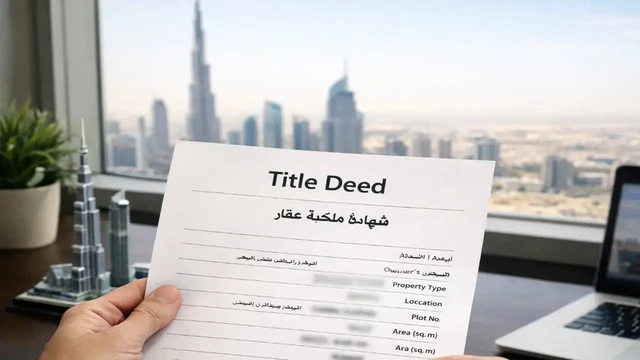
| Contents | Owner name, property address, plot number, area, community, unit number, ownership type |
| Ownership types covered | Freehold, leasehold, and Musataha |
| Validity | Permanent, and it does not expire while you hold the property |
| Transferable | Yes, through a formal Dubai Land Department transfer process) |
| Verifiable | Yes, through the Dubai REST app or the official DLD portal |
Types of Title Deeds in Dubai
| Type | What It Means | Duration | Available to Foreigners | Common In |
|---|---|---|---|---|
| Freehold | Full and permanent ownership of both the property and the land | Indefinite | Yes, in designated freehold areas | JVC, Dubai Marina, Downtown, Palm Jumeirah |
| Leasehold | A long-term lease over the property, excluding the underlying land itself | 10 to 99 years | Yes, but with lease expiry conditions attached | Older communities and some mixed-use zones |
| Musataha | The right to build on and use land without ever owning it outright | Up to 50 years, renewable | Yes, mainly used for commercial purposes | Commercial and industrial land parcels |
Freehold remains the most common and most secure ownership type for residential property across all of Dubai. If you buy within a designated freehold area, such as JVC, Business Bay, Downtown, or Dubai Marina, expect freehold. Most communities covered elsewhere across this guide series fall squarely within these clearly designated freehold zones throughout the emirate.
How to Get a Title Deed in Dubai
The title deed itself is issued at the exact point of property transfer between both parties. This transfer marks the formal, legal handover of ownership from the seller to the buyer. The process generally follows a clear and fairly consistent sequence of steps, outlined in detail below.
- Sign the Sales and Purchase Agreement, commonly known as the SPA, together with the seller.
- Pay the agreed purchase price in full, or arrange mortgage financing through your chosen bank.
- Both parties, or their authorised representatives, must attend a Dubai Land Department-registered Trustee Office.
- Submit every required document to the assigned Trustee Officer for careful review and full verification.
- Pay the Dubai Land Department transfer fee, currently set at four percent of the property value.
- Pay the standard administration fee and the separate Trustee Office fee due at that same appointment.
- The Trustee Officer checks all submitted documents thoroughly before forwarding the file to the DLD system.
- The Dubai Land Department then issues the new title deed under the buyer’s registered legal name.
- The buyer finally receives the physical title deed certificate directly at the Trustee Office counter.
The entire transfer process typically finishes within one to three hours during a single scheduled appointment. Always bring every original document with you, since one missing item can delay the transfer badly. For most cash purchases, the finished title deed is usually issued on that very same day.
Documents Required for Title Deed Transfer
| Document | From Buyer | From Seller | Notes |
|---|---|---|---|
| Original passport | Yes | Yes | Both parties must bring original documents |
| UAE residency visa or entry stamp | Yes | If applicable | Non-resident buyers can still complete the transfer |
| Emirates ID | Yes, if resident | If applicable | Not mandatory for non-resident buyers |
| Original title deed | Not required | Yes | Seller submits the existing deed for cancellation |
| Sales and Purchase Agreement | Yes | Yes | Must be signed by both transacting parties |
| No Objection Certificate | Not required | From developer | Confirms there are no outstanding service fees |
| Mortgage discharge letter | Not required | If applicable | Issued by the seller’s bank when relevant |
| Power of attorney | If applicable | If applicable | Original notarised copy required if represented |
The No Objection Certificate from the developer is the single document that most often causes frustrating delays. Request this certificate well ahead of your scheduled Trustee Office appointment date to avoid unnecessary setbacks later.
Title Deed Fees in Dubai
| Fee | Amount | Paid By |
|---|---|---|
| DLD transfer fee | 4% of the property value | Buyer, by market convention |
| DLD admin fee | AED 580 | Buyer |
| Trustee Office fee, cash purchase | AED 2,000 | Buyer |
| Trustee Office fee, mortgage purchase | AED 4,000 | Buyer |
| Title deed issuance fee | AED 250 | Buyer |
| Mortgage registration fee | 0.25% of loan amount plus AED 290 | Buyer, if mortgaged |
| No Objection Certificate fee | AED 500 to AED 5,000 | Seller, usually |
The four percent transfer fee remains, by a wide margin, the single largest cost in this entire transaction. It is paid directly at the Trustee Office on transfer day and cannot be deferred or financed later.
Off-Plan Properties: Oqood and the Final Title Deed
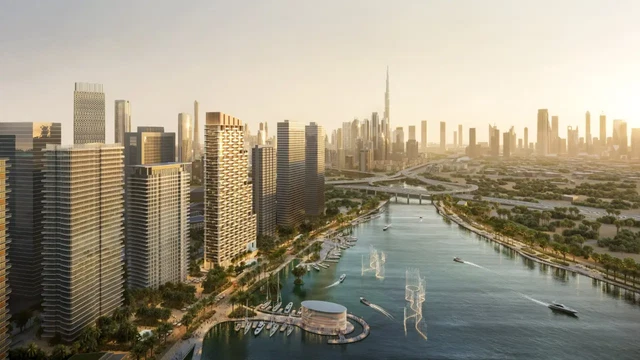
When you purchase an off-plan property in Dubai, you do not receive a title deed immediately. Instead, you receive something known as an Oqood registration, issued directly by the project developer.
Oqood is the Dubai Land Department’s official system used for registering off-plan property purchase agreements. Once you sign a Sales and Purchase Agreement and pay your initial deposit, the developer registers it. That agreement gets registered with the DLD as an Oqood, giving you a recognized legal interest early. This registration confirms you hold a legally recognised claim over a property that is not yet built.
Your Oqood registration confirms your name as the officially registered buyer within the entire DLD system. It also protects your ongoing payments inside the developer’s DLD-regulated escrow account throughout the construction period.
The registration itself remains legally binding and can be transferred if you decide to resell before handover. At handover, this Oqood registration converts automatically into a full and permanent freehold title deed. That conversion marks the exact moment you formally become the legal owner of your finished property.
What to Check on Your Dubai Title Deed
When you finally receive your title deed, verify every one of these fields immediately and carefully. Errors within these specific fields have historically caused ownership disputes and costly, frustrating resale delays.
- Confirm your owner's name is spelled exactly as it appears within your passport document itself. Arabic transliteration mistakes remain, by far, the single most common error found on any record.
- Check that the property address and unit number match both the SPA and the developer’s official floor plan.
- Verify the plot number and community name carefully against the developer’s own registration paperwork and records.
- Confirm the area listed in square metres matches the exact specification stated in your signed agreement.
- Make sure the ownership type correctly reads freehold if you purchased within a designated freehold zone area.
- Review the encumbrances section, which should appear clear for cash purchases and show any financing charges owed.
Request a formal correction from the Dubai Land Department promptly if any field fails to match. Handle this correction before you attempt any resale or rental transaction involving the property itself.
What Your Dubai Title Deed Gives You
A Dubai Land Department registered freehold title deed grants you several important and genuinely lasting ownership rights. Your ownership is permanent and requires no renewal at all until you choose to sell it. You may freely lease your property to any tenant and collect rental income without any restriction. You also retain the right to sell to any buyer, including another foreign national, at any time.
Owners can additionally use their property as collateral to secure a mortgage from a UAE bank. Inheritance rights allow the property to pass smoothly to your heirs under UAE succession law or a will. Finally, the title deed serves as accepted, official proof of address for Emirates ID and bank account applications.
Closing In
A Dubai title deed stands as a government-issued, legally binding proof of ownership for every single buyer. It grants foreign owners the exact same core rights as any property owner would hold elsewhere. Some of these rights are freedom to occupy, rent, sell, mortgage or bequeath the asset freely and confidently.
The transfer is very simple, and typically takes place during a single same-day visit. Make sure all information on your title deed is accurate and always use a qualified conveyancer if necessary.
FAQs about Title Deeds in Dubai
How long does it actually take to get a title deed issued in Dubai overall?
Most straightforward cash transfers complete within one to three hours at a single Trustee Office appointment.
Can a non-resident foreigner really get a title deed issued in Dubai legally today, without residency?
Yes, a full transfer of ownership of a property is possible, and a registered title deed can be issued without the person holding UAE residency.
What is the real difference between a title deed and an Oqood registration document exactly?
An Oqood registers an off-plan agreement early, while a title deed confirms full completed ownership after handover officially occurs.
Can I safely verify my Dubai title deed details online today without visiting an office?
Yes, owners can verify their registered title deed details through the Dubai REST app or the official DLD portal.
Can Foreigners Own Property in Dubai?
Yes, foreigners can legally own property outright within any of Dubai’s designated freehold zones today. Designated freehold zones now cover the clear majority of Dubai’s active residential property market overall.




 Dubai Production City (IMPZ)