Renewing a tenancy contract in Sharjah is more than just a mere signature on a new agreement. It triggers a series of legal rights and duties for the landlord and tenant, which may not be known to either party until a dispute has already begun. There is clarity in Sharjah law regarding the rules for notice periods, rent increases, and landlords' refusal.
Knowing them in advance means you have leverage when you're in negotiations, and you can do so with confidence before you reach your renewal date. This guide explains the complete process, the actual fees, the necessary paperwork, and your rights if things go wrong.
Sharjah Tenancy Renewal at a Glance
The information you need to know about renewals before reading the full guide below is included in the table below:

| Detail | Information |
|---|---|
| Governing Authority | Sharjah Real Estate Registration Department (SRERD) |
| Notice Period Required | 90 days before contract expiry |
| Renewal Registration | Mandatory — via SRERD or approved typing centre |
| Residential Renewal Fee | AED 100 |
| Commercial Renewal Fee | AED 200 |
| Rent Increase Cap | Subject to SRERD market rate assessment |
| Landlord Refusal Right | Permitted with 90 days written notice and valid grounds |
| Dispute Resolution | Sharjah Rental Disputes Committee |
| Late Renewal Penalty | Applies after 30 days from the contract expiry date |
Any renewals will have to be registered with SRERD. An unregistered renewal is subject to the same legal and practical risks as an unregistered original contract, such as the risk of the utilities being cut off.
Sharjah Tenancy Law, The Basics

Tenancy relations in Sharjah are governed by laws, namely the Sharjah Emiri Decree No. 2 of 2007 and its amendments. SRERD is the emirate's authority that concerns all cases related to residential and commercial tenancy contracts.
All Sharjah tenancy contracts will be registered with SRERD. This is true for new contracts, as well as renewals. Sharjah has its own rental market assessment system in addition to the rental market assessment systems of Abu Dhabi and Dubai.
The Sharjah Rental Disputes Committee (SRDC) is the entity to settle disputes and not RERA. RERA is a Dubai authority. In the event that you are moving from Dubai, this is significant: the systems, the rules and the arbitration bodies are entirely distinct.
Rent Increase Rules at Renewal
Rent increases at renewal are the single biggest concern for most Sharjah tenants. The rules exist, they are enforceable, and they protect you — but only if you know them.
A landlord cannot increase rent at renewal without following SRERD's market rate assessment process. If your current rent is in line with or above the SRERD-assessed market rate for your area, the landlord cannot increase it.
If your rent is below the assessed market rate, an increase is permitted, but it must not exceed the cap set by SRERD. In practice, SRERD uses a rental index to assess fair market value per area and property type. Any increase above the permitted level can be challenged at the Sharjah Rental Disputes Committee.
Always verify the current SRERD rental index figures directly on the Sharjah government portal before your renewal discussion. Market assessments are updated periodically, and the specific cap applicable to your property may differ from general estimates online.
The table below compares Sharjah and Dubai rent increase rules to clarify the key differences for tenants moving between the two emirates:
| Rule | Sharjah | Dubai |
|---|---|---|
| Governing system | SRERD market rate assessment | RERA Rental Index |
| Maximum increase | As per SRERD assessment | 5% - 20% based on RERA index gap |
| Notice required | 90 days minimum | 90 days minimum |
| Dispute authority | Sharjah Rental Disputes Committee | Dubai Rental Disputes Centre |
| Increase frequency | Once per year maximum | Once per year maximum |
Steps to Renew a Tenancy Contract in Sharjah
Here are the steps to ensure that your tenancy renewal is done properly and on time:
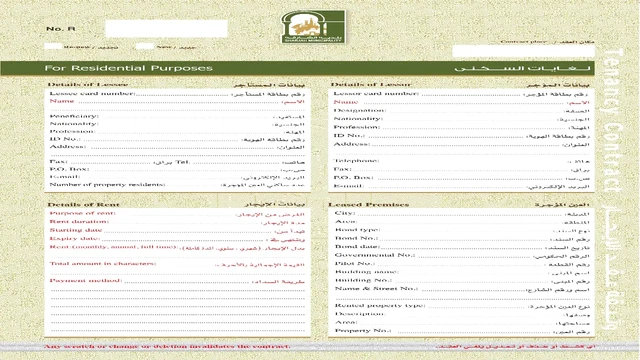
- Do check the expiration date of your contract at least three months in advance of your lease's expiration date.
- Notify your landlord that you plan to renew. Do this at least 90 days prior to expiration.
- Discuss renewal arrangements with the landlord; this will be the length of time, the rent, and whether there are any changes to the original contract conditions.
- Have everything ready for your appointment. Check off items on the checklist in Section 6 to ensure that no items are omitted.
- Go to an SRERD-approved typing centre or to the Sharjah Government portal to start registration.
- The typing centre prepares the renewed contract in the standardised SRERD format.
- Both parties sign the renewed contract in the presence of the typing centre official or the registration agent.
- Pay the applicable renewal fee. AED 100 applies to residential leases and AED 200 to commercial leases. Typing centre service fees are additional.
- Receive the renewed and SRERD-registered contract with the official stamp confirming it is legally recognised.
- Maintain a copy of the registered contract of your ADDC utility account, visa sponsorship records, and Emirates ID address updates.
Renew the contract within 30 days of the contract's expiration date to prevent a late registration fee. After this period, it will cost you an additional fee per month for any time after.
Documents Required for Renewal
The table below lists everything you need to bring to the typing centre or submit online:
| Document | Required From |
|---|---|
| Existing registered tenancy contract | Both parties |
| New or amended tenancy agreement | Both parties |
| Tenant's Emirates ID | Tenant |
| Landlord's Emirates ID or passport copy | Landlord |
| Title deed or ownership document | Landlord |
| Trade licence (commercial renewals only) | Tenant |
| Power of attorney (if acting on behalf) | Authorised agent |
Having all documents ready before your appointment prevents the most common renewal delay. Confirm the landlord's title deed is current before submission. Changes in property ownership that have not been updated with SRERD can stall the renewal process and may require a separate correction before the renewal can proceed.
Renewal Fees and Late Penalties
The table below shows the standard fees for residential and commercial contract renewals:
| Fee Type | Residential (AED) | Commercial (AED) |
|---|---|---|
| Standard Renewal Fee | AED 100 | AED 200 |
| Late Penalty (after 30 days) | AED 50 per month | AED 100 per month |
| Contract Amendment | No additional fee | No additional fee |
| Typing Centre Service Fee | AED 30 - 60 | AED 30 - 60 |
The late renewal penalty is applied by SRERD when registration is completed more than 30 days after the contract expiry date. It accrues every month, so a two-month delay on a residential lease adds AED 100 to the standard renewal cost.
Registration submissions done within the 1st week after the expiry date will not incur the 1st monthly registration penalty if it was not registered on the original date.
What If the Landlord Refuses to Renew?
While a landlord can refuse to renew a contract in Sharjah, there are certain grounds and a specific requirement for the notice period.
The main reasons for refusal are:
- If the property is used personally by the landlord or a first-degree family member.
- If the property is in the process of major works that would require the property to be vacated.
- If the property is to be demolished or redeveloped with the necessary permits.
A landlord cannot simply decide not to renew a lease or demand over the required rate for the renewal of a lease. You may complain to the Sharjah Rental Disputes Committee if you think that your refusal is not justified. The Committee may ask the landlord for proof of the reasons given for refusal. Where evidence is insufficient, the Committee has the authority to order renewal under the existing contract terms.
Closing In
When it comes to renewing a tenancy contract in Sharjah, it's a hassle-free process as long as you're aware of the rules beforehand. The 90-day notice period, SRERD registration, and the rent increase process are all there to safeguard both parties.
Even the typical issues you face, like late registration, rent increases, and recalcitrant refusal, can be avoided if you know how the system works before you get to your renewal.
FAQs about Tenancy Contract Renewal in Sharjah
Can a landlord increase rent every year in Sharjah?
A landlord may apply for a rent increase once per year at renewal, but only within the limits set by the SRERD rental market assessment.
How long does the notice have to be in Sharjah?
The tenant and the landlord should give at least 90 days' notice prior to the end of the contract. A landlord cannot demand a tenant's departure if they give the tenant less than 90 days' notice.
What happens if I do not renew my Sharjah tenancy contract on time?
If the contract expires without a formal renewal being registered with SRERD, a late penalty applies after 30 days. For residential leases, this is AED 50 per month. For commercial leases, it is AED 100 per month.
Is Sharjah tenancy renewal different from Dubai?
Yes. Sharjah renewals are governed by SRERD and Emiri Decree No. 2 of 2007. Dubai renewals fall under RERA and the Dubai Rental Law.
What tips to follow if the landlord refuses to renew the contract?
Document every communication with your landlord during the renewal period. Written records, emails, messages, or letters are the primary evidence accepted by the Sharjah Rental Disputes Committee when assessing whether the correct procedures were followed by both parties.








 Dubai Industrial City