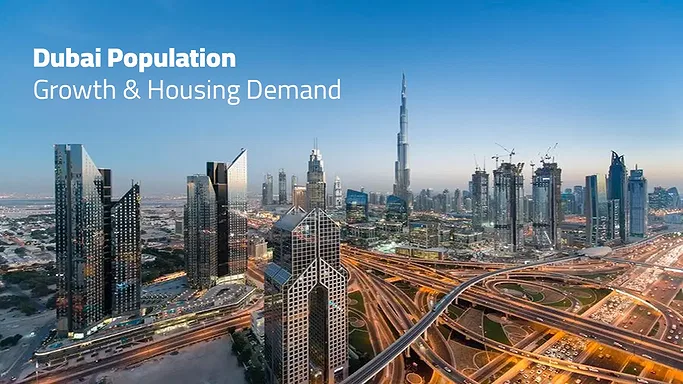
Dubai’s proactive urban governance makes it a global leader in future-proofing metropolitan environments. It draws millions of residents annually with its cosmopolitan lifestyle, strategic policies, and thriving economy.
The city has reached the end of 2025 with a population exceeding 4 million, marking a staggering demographic jump unseen anywhere else in the world. It is also witnessing a profound change in residential dynamics across all segments, including luxury villas and affordable apartments.
So, let’s dive into this comprehensive analysis where we unpack population trends and their impact on housing demand. Understanding this structure is essential for both homeowners and investors planning to enter the market as we move into 2026.
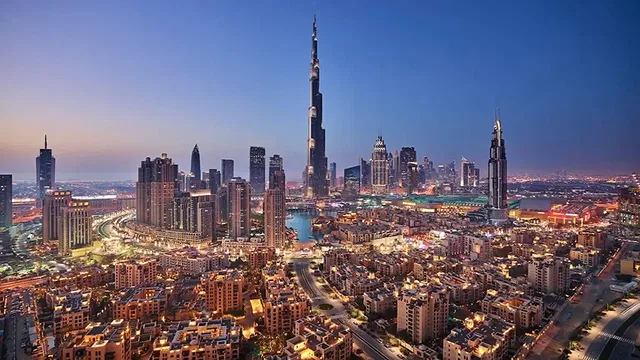
Dubai Population Boom: The Engines Behind Its Expansion
The demographic expansion in Dubai has been continuously breaking records over the past few years. Approximately 2.4 million people have become a part of this dynamic emirate in the previous 17 years. The city’s population experienced a dramatic surge in just one month. From a population of 3.95 million recorded in the first half of 2025, the values have reached 4.04 million as of mid-November 2025.
According to the reports by Khaleej Times, the city has welcomed 17,660 in just one month, celebrating a year-on-year record increase of 4.47% in 2025. This exceptional boom translates to roughly 470 new residents entering the emirate every single day. With this population momentum, Dubai’s real estate market requires a supply of 150 homes per day.
Foreign investment, employment hubs, visa reforms, and a quality lifestyle have driven this scope of population gain. As the vanguard for international talents and expatriates, the city’s appeal has transcended beyond professional demographics and now encompasses families, retirees, and millionaires.
The city’s population, 50 years ago, was only 175,000. This showcases a 2,185 percent rise from 1975 to 4 million in 2025. Moreover, this surge doesn’t plan to cease but anticipates a steady upward trajectory through 2026 and by the end of the decade. Experts claim that the city will be home to over 5 million residents by 2030. This ultimately fosters the long-term demand outlook for residential units.
1. The Beginning of the Gap Between Population Growth and Housing
Dubai’s residential supply is struggling to keep pace as the population continues to swell. As of the latest reports from Jan 2026, the estimated number of completed units totals 31,437, which accounts for only 21% of the total 152,402 units launched.
This supply falls well short of the demand implied by the population growth and equates to needing roughly 150 new homes daily to align with the rising resident count.
The gap has stemmed from a persistent imbalance between project launches and actual delivery rates. Developers are releasing ventures at an incredibly high pace, but only 20-22% of those launches have reached completion between 2024 and 2025.
This surfaces a twofold consequence where prices steadily increase, and sales and rental markets become tight, specifically in segments with limited completed stock. Apartments, however, dominate new launches, comprising an 89% ratio compared to the 11% villa and townhouse launches.
Residential Market Records: Demand Breakdown by Segment
1. Record-Breaking Transactions in 2025
The residential market in Dubai has registered a phenomenal activity in 2025. According to Savills, the city encountered roughly 50,000 residential transactions in Q3 2025, with 86% of total transactions dominated by the apartment segment.
Overall, this accounted for a Dh 559.4 billion value as of end-October 2025. These historic high values and volumes clearly reflect endless demand intensity across both off-plan purchases and ready-to-move-in homes.
2. Off-Plan Real Estate and Investor Confidence
Off-plan sales formed the bedrock of market activity as 37,000 deals closed, accounting for 69% of the total transactions. This record-breaking volume is driven by Dubai’s robust regulatory environment and flexible payment schedule.
For off-plan properties, high-growth zones remain desirable. Investors are particularly eyeing these areas for their blend of amenities, accessibility, and future upside.
Supply Pipeline and Delivery Prospects: An Outlook for 2026 and Beyond
1. Current Delivery Landscape
Despite population outpacing housing supply, Dubai is projecting a surge in completions over the next 2 years. Approximately 100,000 new deliveries are anticipated to be delivered between 2026 and 2027.
While this supply surge may help in easing the pressure on increased residential consumption, experts warn of a quicker absorption of the new stock due to unprecedented population growth. This consistent absorption is likely to exist in the mid-market segment, where demand remains strong.
2. Structural Arrangement of Upcoming Supply
Various structural trends linked to the future supply notice an overwhelming emphasis on apartment units compared to lower-density housing stock. Over 83-90% of newly launched or planned inventory is covered by apartments, making townhouse and villa units a relatively constrained segment.
The substantial volume of apartments affects high-salaried professionals and families looking for long-term residential stability in Dubai. This ultimately reinforces a gap in supply dynamics.
3. Impact of 2026 Market Conditions
Industry experts are forecasting a moderate shift towards a balanced supply-demand relationship in 2026. The coming year may expect a cooling in price growth, which leads to greater choice for buyers, specifically in mid-market apartments.
While the population increase will still outstrip new unit delivery, the gap is expected to be minimized. This suggests a resilience in demand fundamentals even in the face of swelling supply stock.
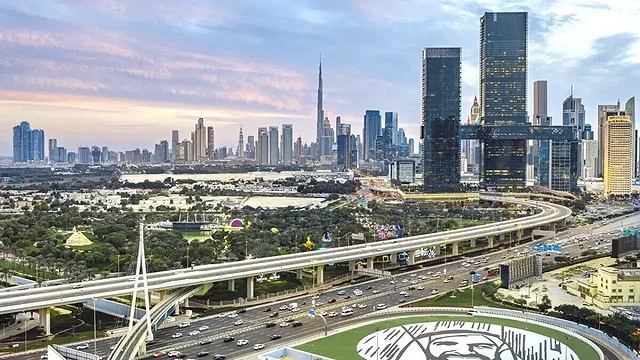
Population Growth and Housing Costs: Rental & Purchase Trends
The variance between demand and supply exhibits direct consequences for housing costs. Throughout the year 2025, sales prices and rental rates have continued to escalate, with specific precincts registering a double-digit yearly increase.
Looking at the broader trends in housing costs, the city’s real estate market expects an upward trajectory even amidst the possibility of price corrections as anticipated by Finch. This rise is underpinned by sustained investor demand and demographic growth.
Well-connected and central urban pockets are likely to witness elevated purchase trends and soaring rental costs as long-term expats and families are relocating to Dubai in volume.
Housing Preferences Caused by Demographic Shifts
1. Broader Expatriate Influence
The unprecedented inflow of expats has significantly accelerated the population increase in Dubai. As they form a large proportion, these newcomers come with diverse housing preferences. From family villas to ultra-luxurious penthouses and high-end serviced apartments, expats’ varying preferences are shaping market demand across multiple segments.
The rise of millionaires and high-salaried families in Dubai has also resulted in a greater appetite for villas and expansive mansions. Even apartment stock dominates the available inventory, suburban master communities (The Valley, Damac Hills 2) are surfacing with an abundance of villa and townhouse stock.
2. Diverse Residential Configurations
Along with the sheer increase in the Dubai population, residential inventory is going through serious modifications in household size and layouts. A notable rise in compact living spaces and solo-occupant units has been observed. This further pushes market demand beyond the apparent population figures.
Furthermore, the demand for owner-occupied homes is growing across the market as government programs and appealing mortgage options encourage residents to shift from rental to ownership lifestyles.
Government Initiates and Housing Incentives
The rising demand for housing by the swelling population is acknowledged by Dubai’s leadership. The authorities are continuously monitoring the market to support the sector’s capacity and align it with its residents.
Several initiatives like streamlined mortgage pathways, competitive pricing, and staggered payment plans exemplify proactive measures. Likewise, Dubai is substantially investing in infrastructure and strategic land allocations to catalyze new developments across both mid-market and affordable segments.
As the scale of population growth already exceeds 17,000 new residents in a single month of October 2025, these policies aim to ease friction points.
Sustainability and Urban Planning in Housing Demand
Dubai’s long-term visions, such as D33 and 2040 Urban Vision, align well to address population growth challenges. These urban planning initiatives aim to balance livability, density, and sustainability. It also takes into account anticipated household needs and regional infrastructure investments, which serve as critical factors in meeting future housing demand.
Furthermore mixed-use developments and high-growth corridors have become active to absorb demographic pressure. All these nodes ensure presents of top-of-the-line amenities, seamless connectivity, and sector diversification.
Urban planning measures in a dynamic estate like Dubai are essential, not just to cater to housing supply expansion but to ensure the city’s growth under the shelter of sustainability.
Closing In
The emirate’s housing market has taken unexpected turns due to an extraordinary population surge in 2025 and projected momentum in 2026. While demand continues to outpace supply, particularly in family-centric and villa segments, the property market is still registering historic records in transaction activity.
In addition to expanding delivery pipelines and strong off-plan interest, the government is utilizing strategic initiatives to model sophisticated urban planning and evolve housing preferences to address the residential imbalance.
The housing market of Dubai serves as both a testament on a global level and a dynamic challenge in sustainable urban development as it approaches a projected 5 million population.
Explore More...




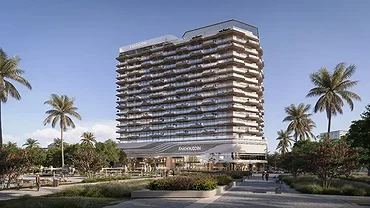

 Dubai Land Residence Complex (DLRC)